

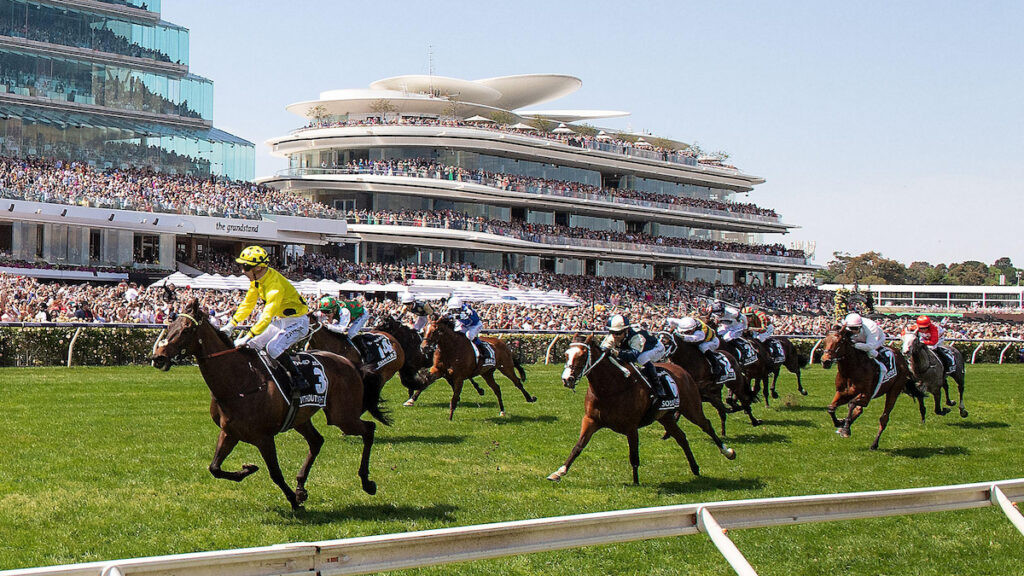
The richest two-mile handicap in the world and one of the richest turf races anywhere, the Melbourne Cup is known as “the race that stops the nation”.
I’ve delved into ALL winners this century and compared them to the last 10 renewals, to see if we can establish the type of horse it takes to land this coveted prize, and what might be changing.
KEY TRENDS
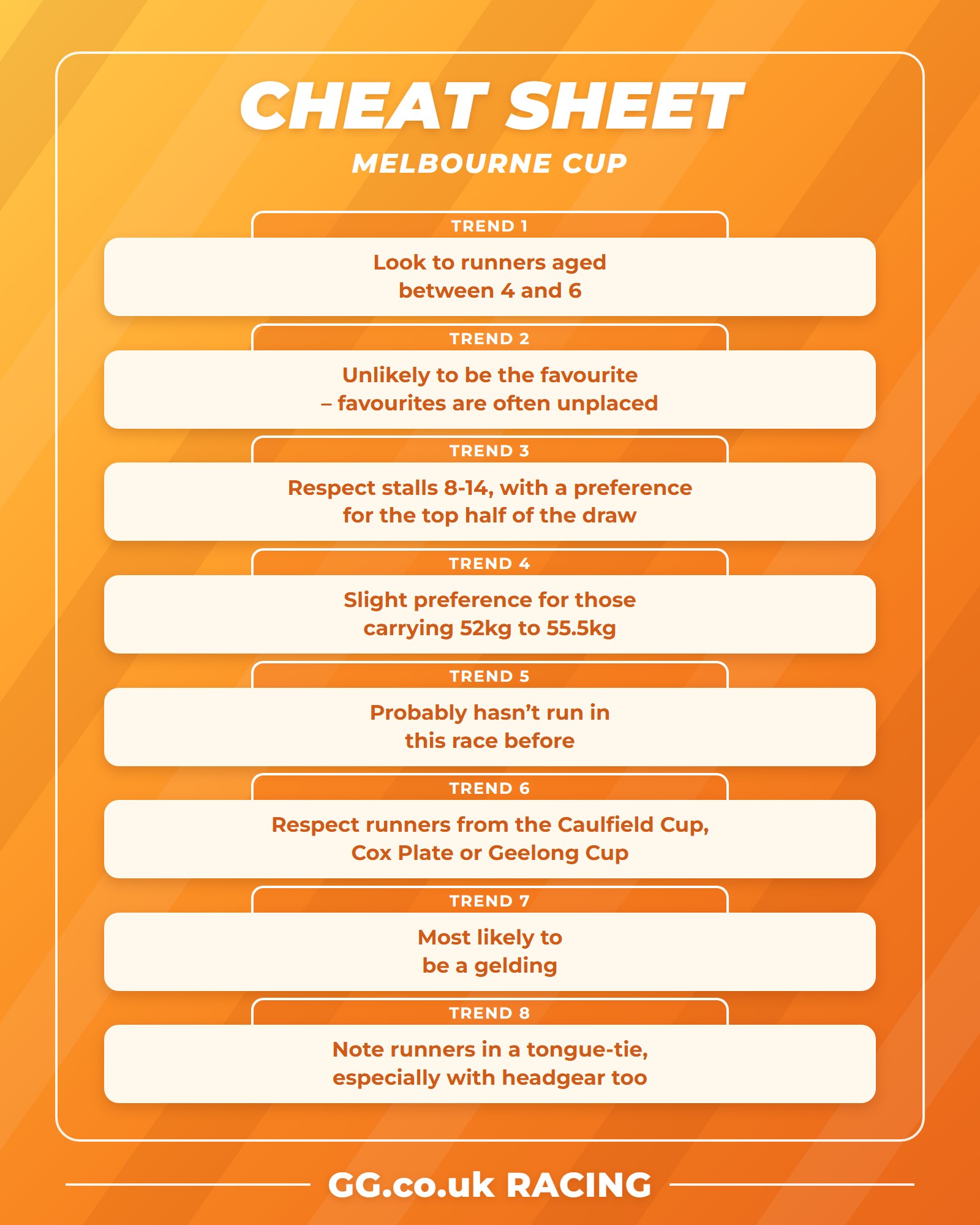
- Look to runners aged between 4 and 6
- Unlikely to be the favourite (the favourite is often unplaced)
- Stalls 8 to 14 should be respected, and overall preference is for those drawn in the top half
- Slight preference for horses carrying between 52kg and 55.5kg
- Probably hasn’t run in this race before
- Respect runners coming from the Caulfield Cup, Cox Plate or Geelong Cup
- Most likely to be a gelding
- Take note of runners in a tongue-tie, especially if headgear is applied too
Focused Trends
AGE
- 4yo – 6/26 (23%) & 3/10 (30%)
- 5yo – 6/26 (23%) & 3/10 (30%)
- 6yo – 10/26 (38%) & 1/10 (10%)
- 7yo – 3/26 (12%) & 2/10 (20%)
- 8yo – 1/26 (4%) & 1/10 (10%)
There has been just one 8-year-old winner of this race this century, which came in 2020 for Joseph O’Brien. There have been just three winners of that age in the race’s history, the previous one back in 1938, so you’re going to be looking for a horse younger than 8.
Most winners have been 4 or 5-year-olds in recent years, although in the longer term 6-year-olds have won the most races.
PRICE
- Favourites – 3/26 (12%) & 0/10 (0%)
- 14/1 or bigger – 11/26 (42%) & 5/10 (50%)
The last winning favourite came back in 2013 and there have been just three winning market leaders this century.
There have been some big-priced winners in recent years, including a 90/1 winner in 2024 and a 100/1 winner back in 2015. It’s hard to pitch a price window when trying to whittle down this field, so other factors seem more relevant, and at this point we’re arguably due a winning favourite, despite their record not reading very well.
DRAW
- Barriers with more than one win this century – 5, 8, 10, 13, 14, 22
- Barriers with a win in the last 10 years – 4, 5, 8, 12, 13, 16, 17, 18, 19, 21
- Barriers in the TOP half – 14/26 (54%) & 7/10 (70%)
Barriers (stalls) 8 to 14 have been fruitful this century, with 12 winners from 26 runnings, but there does seem to be a bit of a swing in favour of higher-drawn horses, with 5 of the last 10 winners coming from barrier 16 or higher.
There have been 9 renewals with soft in the going description this century, and 7 of those 9 winners were drawn in the top half.
WEIGHT CARRIED
- Average weight carried – 53.85kg this century & 54kg in the last 10
Weights are declared in kilograms in Australia, and the sweet spot sits around 52kg to 55.5kg, with 15 of the 26 wins this century.
Interestingly, the top 6 and bottom 3 in the weights (by saddle number) account for 15 of the 26 winners this century and 6 of the last 10.
MELBOURNE CUP PREVIOUS AND PREP RACES
- Has run in the race before – 7/26 (27%) & 3/10 (30%)
- Last ran in the Caulfield Cup, Cox Plate or Geelong Cup – 16/26 (62%) & 6/10 (60%)
Most winners are having their first crack at this race, but 16 winners this century came from either the Caulfield Cup, Cox Plate or Geelong Cup, which might be a better pointer than looking for or against previous experience in this specific race. Last year’s winner won the Caulfield Cup before landing this.
Many horses have tried to come back and win this race at the second (or later) time of asking, and 20 of the races this century have seen a returning horse finish in the top 4. There have been 7 horses to come back and win.
BREEDING
British-bred, New Zealand-bred and Australian-bred horses have each claimed 5 victories this century, with Irish-breds just behind on 4 wins. French, German and American-breds have taken 2 each. In the last decade, Australian-breds have won 3 renewals, with British and Irish-breds producing 2 winners each.
SEX
Only 14 mares have won the Melbourne Cup, and three of those wins belong to Makybe Diva, who took this in 2003, 2004 and 2005. There’s been just one winning mare since then, which was Verry Elleegant in 2021.
Of the males, we used to see plenty of stallions taking this race, with 9 this century and 7 of those coming in a streak between 2008 and 2014. Since 2017, though, the 7 male winners have all been geldings, which looks like a turning trend.
HEADGEAR
- Won sporting headgear other than a tongue-tie – 8/26 (31%) & 2/10 (20%)
- Won sporting a tongue-tie – 5/26 (19%) & 4/10 (40%)
I’m not sure how much to read into the use of headgear, but 4 of the last 6 winners were assisted by a tongue-tie, and two of those also sported either cheekpieces or a visor.
Prior to this, 6 horses had won with blinkers applied, and the last of those, in 2015, also sported a tongue-tie.
Commercial notice: This article on GG.co.uk contains affiliate links. The offers we promote come from operators that we trust and our experts have first-hand experience dealing with. If you open an account through one of these affiliate links then GG will earn revenue. However, we ensure that the money earned goes back into improving and enhancing our coverage of horse racing and other sports, as we look to provide an excellent service to our growing audience.